
Popular Tree Staking Service Products For Stronger Trees
Discover essential staking equipment that provides support and promotes optimal growth for trees in various landscaping projects.
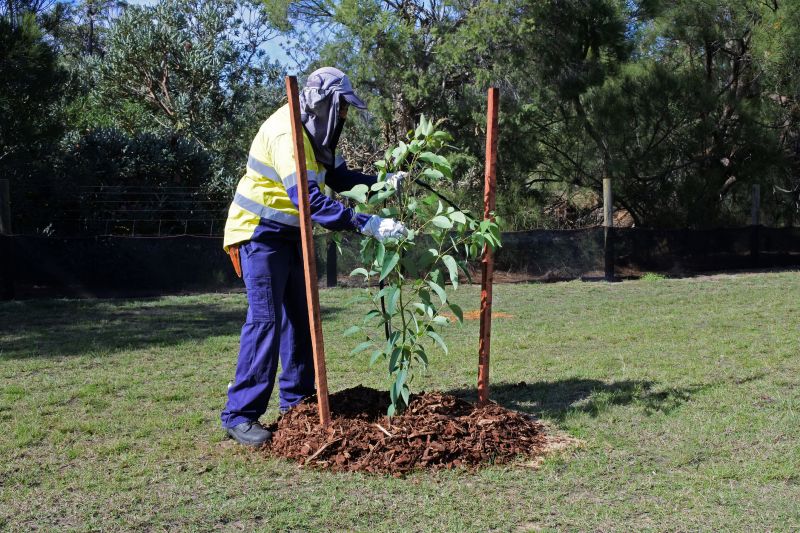 Tree staking services are essential for supporting young or fragile trees, helping them establish stability and grow healthily. These services typically involve the use of various staking products that secure the tree trunk and prevent movement caused by wind or other environmental factors. Proper staking not only provides physical support but also encourages correct growth patterns and reduces the risk of damage to the trunk and root system.
Top Overall Option
Adjustable Tree Stake System
An adaptable staking system that offers adjustable support components to accommodate different tree sizes and growth stages. Designed with durable materials, it provides reliable stability while allowing for flexibility as the tree develops. This system is suitable for a variety of planting environments and promotes healthy growth by minimizing stress on the trunk.
Types of Products For Tree Staking Service
Wooden Stakes
Traditional and sturdy, wooden stakes are commonly used for supporting young trees in various soil conditions.
Metal Stakes
Durable and long-lasting, metal stakes provide strong support for larger or more established trees.
Plastic Stakes
Lightweight and resistant to moisture, plastic stakes are suitable for temporary support and small trees.
Adjustable Support Systems
Flexible systems that can be modified as the tree grows, offering customizable support solutions.
Tree Ties and Fasteners
Various ties and fasteners designed to secure stakes to the tree without causing damage.
Protective Sleeves
Cushioning sleeves that prevent injury to the tree bark from stakes and ties.
Wire Supports
Metal wires used in conjunction with stakes to provide additional stability.
Bamboo Stakes
Eco-friendly and lightweight, bamboo stakes are a natural support option for small trees.
Rope Supports
Strong ropes that can be tied to stakes and trees for adjustable support.
Concrete Stakes
Heavy-duty support for large trees or in high-wind areas, offering robust stability.
Flexible Support Cables
Cables that allow movement while maintaining support, ideal for wind-prone locations.
Tree Guying Kits
Complete kits that include stakes, ties, and fasteners for comprehensive support systems.
Ground Anchors
Anchors used to secure staking systems firmly into the soil, especially in loose or sandy ground.
Tree Guard Supports
Supports designed to work with tree guards, protecting young trees from damage.
Adjustable Brace Supports
Supports that can be adjusted for different angles and support needs during growth.
Popular Choices
Widely used for their strength and durability, suitable for various tree sizes.
Versatile and lightweight, often favored for temporary or small-scale planting.
Easy-to-use fastening options that secure stakes to trees without causing damage.
Popular for their flexibility and ability to adapt as trees grow.
Natural and eco-friendly, commonly chosen for ornamental or smaller trees.
Affordable and adaptable, used in various staking configurations.
Reliable in loose or sandy soils, providing extra stability.
Help prevent bark injury and are often paired with stakes for young trees.
Provide additional support, especially in windy environments.
All-in-one solutions that simplify the staking process for multiple trees.
Allow natural movement while maintaining stability, popular in windy areas.
Heavy-duty options for large or mature trees needing substantial support.
Offer customizable support angles and heights for optimal growth.
Selecting the right staking products depends on several factors, including tree size, soil type, and the environmental conditions of the planting site. Different staking methods and materials are available to suit various needs, from lightweight stakes for small saplings to more durable options for larger, established trees. The goal is to provide support without constraining the tree's natural movement, which is vital for healthy development.
In addition to the stakes themselves, accessories such as ties, fasteners, and protective sleeves can enhance the effectiveness of a staking system. These components help distribute pressure evenly and prevent damage to the tree bark. Proper installation and regular inspection are crucial to ensure the staking system remains effective as the tree grows and the conditions change.
Overall, investing in quality tree staking products can contribute significantly to the successful establishment of a new tree or the stabilization of a vulnerable one. Whether for residential landscapes, commercial planting projects, or conservation efforts, choosing appropriate staking solutions is a key step in promoting healthy tree growth and longevity.
Key Buying Considerations
- Tree size and growth stage to determine appropriate stake dimensions and support type.
- Soil type and stability to select the most effective anchoring and support system.
- Environmental conditions such as wind, rain, and soil moisture that influence support needs.
- Material durability and resistance to weathering for long-term support solutions.
- Ease of installation and adjustability to accommodate growth and changing conditions.
- Protection features like bark sleeves to prevent damage from stakes and fasteners.
- Compatibility of ties and fasteners with the chosen stakes and tree trunk size.
- Weight and portability for ease of handling during installation and maintenance.
- Cost considerations balanced with quality and longevity of the staking system.
- Availability of replacement parts or accessories for ongoing support and adjustments.
- Aesthetic preferences, especially for visible support systems in landscaped areas.
- Regulations or guidelines for staking in specific regions or types of planting projects.
- Compatibility with other supports or protective devices used in the planting area.
- Environmental impact of materials used, if relevant to project specifications.
- Supplier reputation and reviews to ensure product reliability and quality.
This content may contain affiliate links. We may earn a commission if you make a purchase through these links, at no additional cost to you.